Restoration Guide
Water Stain on the Ceiling: What It Means and What to Do
A yellow or brown ring shows up on the ceiling, or water drips out of a light fixture or heating vent. It might be a bathroom above, a roof leak, or condensation. This guide covers how to tell which, what to do first, and when a stain needs more than a coat of paint.

Harris Restoration
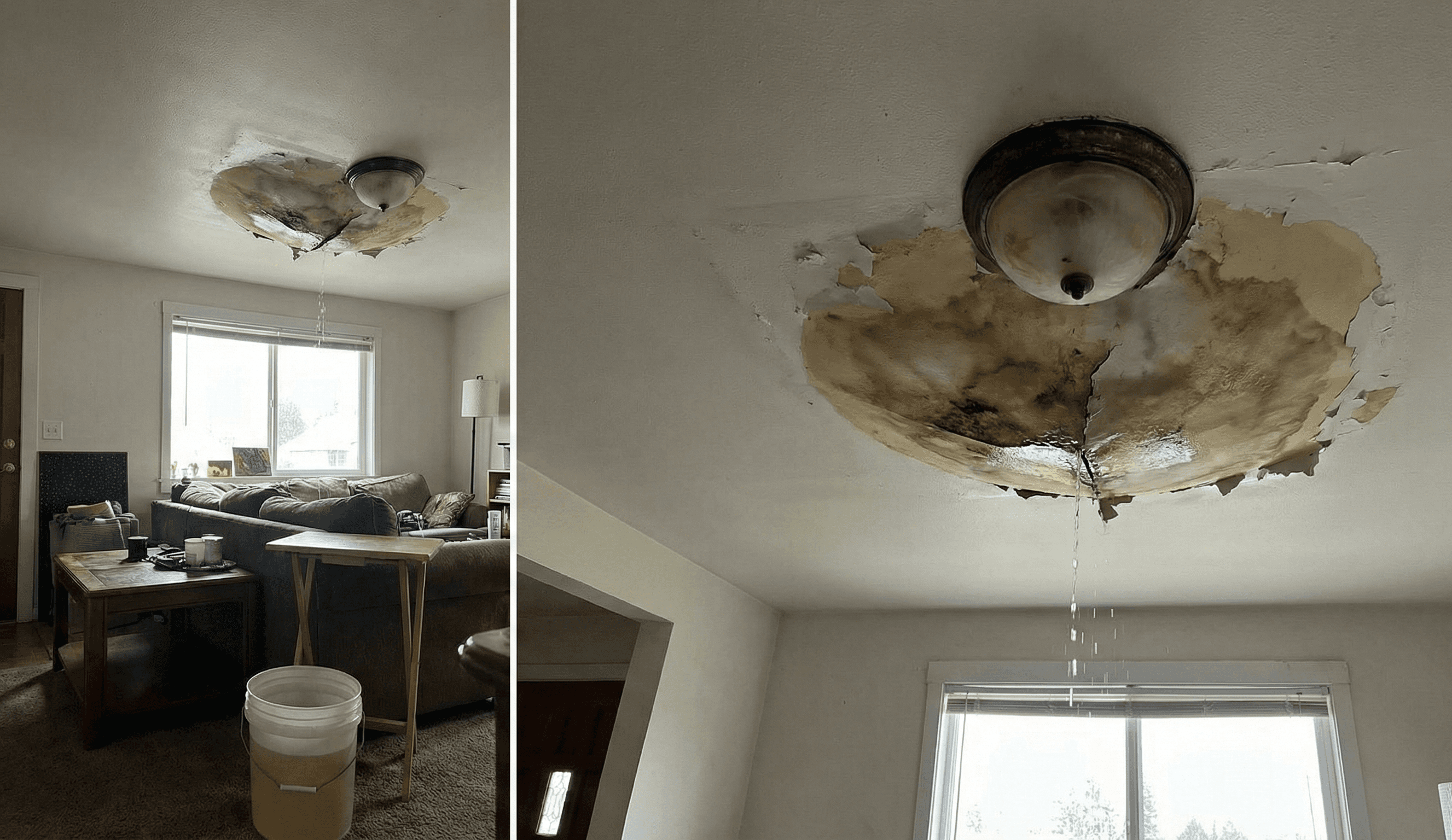
"We discovered it coming out through a heating vent downstairs"
That is how one of our customers described finding water from an upstairs bath. Their toddler had poured water out of the tub, and it showed up a floor below. Most ceiling stains start the same way. Water finds a path, travels along a joist or a duct, and shows up somewhere you did not expect.
A stain on the ceiling is the visible end of that path. The question is where the water came from, whether it is still coming, and how much is sitting above the drywall where you cannot see it.
What the stain is telling you
A ring with a dark edge usually means water got in, spread out, and dried. Each new wetting can add another ring.
A soft, sagging, or bubbling spot means water is sitting on the back of the drywall right now. Treat this as active.
Dripping from a light fixture or vent means the water has found an opening. Turn off power to that circuit at the breaker before you go near it.
Small gray or black speckles in or around the stain can be mold. That means the area has stayed damp for a while.
The usual sources
Under a bathroom
This is the most common one. A toilet wax ring, a loose supply line, a failed tub drain, or worn grout and caulk around a shower can all leak into the ceiling below. A stain that grows after showers or flushing points here.
Under a roof or attic
Stains on top floor ceilings that show up after rain usually point to the roof: flashing around a chimney or vent pipe, a damaged shingle, or a clogged gutter backing up under the roof edge. Stains that show up in cold weather without rain can be condensation in the attic.
Near HVAC equipment
An air handler or AC unit in the attic can leak from a clogged condensate line. Ducts that run through cold spaces can also sweat and drip.
Under a kitchen or laundry
Dishwasher and washing machine hoses, fridge water lines, and sink drains on an upper floor can all be the cause.
What to do first
Stop the source if you can. Shut off the toilet or fixture valve. If you cannot find it, shut off the main water valve.
Turn off power to any light or fan in the wet area.
Put down a bucket and towels, and move furniture and electronics out from under the spot.
If the ceiling is bulging with water, keep people out from under it. A sagging section can come down without warning.
Take photos of the stain, the fixture above, and anything damaged. Write down when you noticed it.
Call a plumber or roofer to fix the source. Drying a ceiling while the leak is still going wastes the effort.
Can you just paint over it?
Sometimes. If the stain is small, the drywall is firm and dry, and you know the source was a one-time event that has been fixed, a stain-blocking primer and paint is a reasonable fix.
Painting is the wrong move if any of these are true:
The drywall is soft, crumbly, or sagging.
You do not know where the water came from.
The stain keeps coming back or getting bigger.
There is a musty smell, or you see spots that look like mold.
The leak ran for a while before anyone noticed.
In those cases, insulation and framing above the stain may still be wet. Wet insulation holds water against wood for a long time. The EPA advises drying water-damaged materials within 24 to 48 hours to prevent mold growth, and a ceiling cavity does not dry well on its own. Our guide to preventing secondary water damage explains what happens when hidden moisture gets left behind.
What a restoration company checks
Moisture readings on the ceiling, walls, and floor around the stain to map how far the water spread.
A thermal camera to spot cold, wet areas behind the drywall.
Whether insulation above needs to come out or can be dried in place.
Whether a small section of drywall needs to be opened to dry the cavity.
A drying plan with dehumidifiers and air movers, and readings until the materials are actually dry. Our post on the structural drying process walks through that part.
Sometimes the answer is a small cut and a few days of drying. A good company will tell you which one you have.
DIY or call someone?
A small, old, dry stain from a known and fixed leak is usually a weekend paint job. Call a pro if the ceiling is soft or sagging, water came through a light or vent, the source is unclear, or you smell something musty. Our customer with the heating vent wrote that our team "took the time to explain what they were checking, answered all of our questions without rushing, and left us feeling reassured." That is what a good first visit should feel like.
If the leak was sudden, like a split supply line or an overflow, it may be covered by your homeowners policy. Take photos before anything gets cleaned up.
Get the ceiling checked
Harris Restoration finds the wet areas behind the stain, dries what can be dried, and replaces only what has to go. We answer 24/7, and our in-house public adjuster, Nataie, who is fully IICRC certified, can help if you file a claim. Call (971) 267-2779 or request an inspection. Learn more about our water damage restoration service.
DON’T WAIT.
The Damage Won’t.
Read more

Who Pays the Restoration Bill If Insurance Is Slow?
The water is dried out and the restoration company sent the bill. But the adjuster has not called back, the claim is still open, and you are wondering whether you are on the hook. This guide explains how payment usually works on an insurance claim, what you can do to speed it up, and the questions to ask before work starts.

Sewage Backup Under the House: Cleanup and Coverage
A broken drain line or a backed-up sewer has sent wastewater into the crawlspace. You may smell it before you see it. This guide covers what to do right away, why sewage cleanup is different from a clean water leak, and how insurance usually handles it.

Should You File a Water Damage Claim or Pay Yourself?
The water is off and the damage is in front of you. Now comes a harder question: file an insurance claim, or pay for it yourself? The answer depends on your deductible, how big the damage really is, and how a claim might affect you later. This guide walks through how to decide.