Restoration Guide
Structural Drying After Water Damage: What to Expect
The water is out, but now there are loud fans and dehumidifiers running in your house, and you want to know how long this lasts and why. Structural drying pulls the moisture out of walls, subfloors, and framing that you cannot see. Here is what happens each day, what you will notice, and how we know when it is done.

Harris Restoration
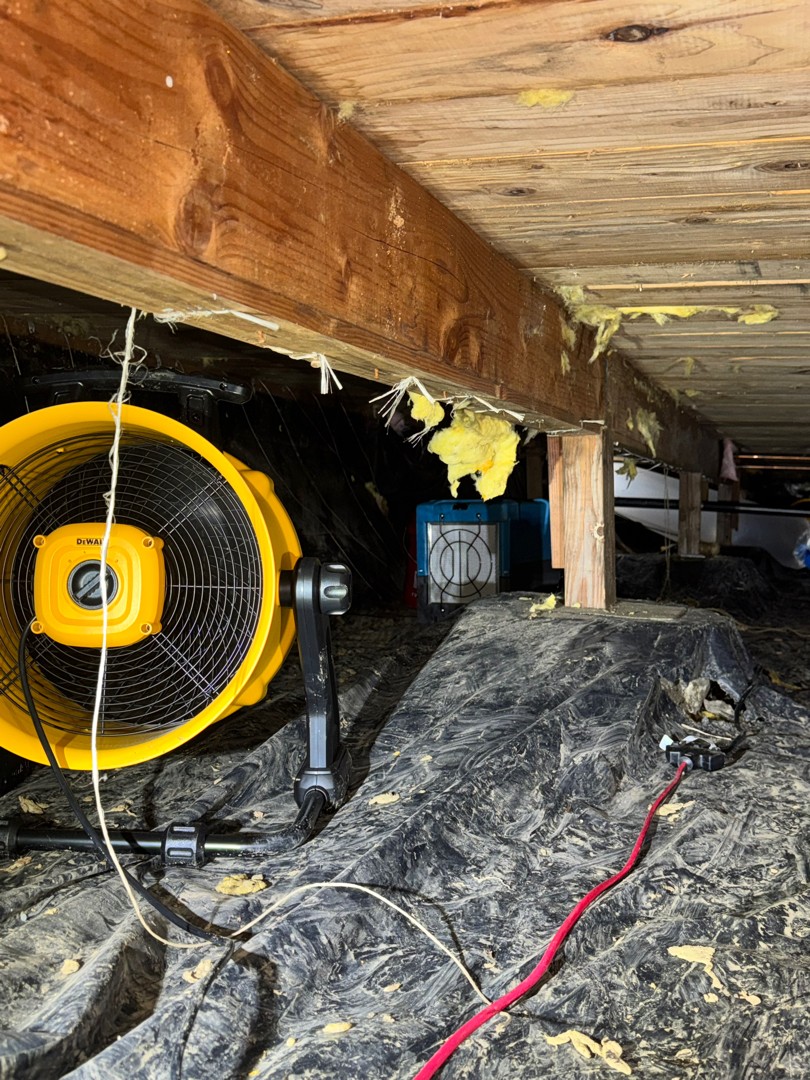
"How long do these fans have to run?"
It is the first thing people ask once the standing water is gone and the equipment goes in. The house is loud, the hallway is full of hoses and cords, and the floor looks dry already. So why is the crew still coming back every day?
Because the floor looking dry and the floor being dry are different things. Water soaks into the bottom of drywall, the subfloor, the framing, and the insulation. Structural drying is the stage that gets that hidden moisture out so it does not turn into mold, swelling, or rot later.
What structural drying is
Drying a building is controlled evaporation. Air movers blow across wet surfaces so moisture leaves the material and enters the air. Dehumidifiers pull that moisture out of the air so it does not settle back into the house. Repeat until the materials reach a normal moisture level for your home.
The crew controls three things:
Airflow. Air movers are aimed at wet walls, floors, and cavities. Sometimes baseboards come off or small holes are drilled low in the wall so air can reach inside.
Humidity. Commercial dehumidifiers keep the air dry enough to keep pulling water out of the materials.
Temperature. Warmer air holds more moisture, so keeping the space at a normal indoor temperature helps.
What happens day by day
Day one
After extraction, the crew maps the moisture with meters and a thermal camera, takes baseline readings, and photographs the wet areas. Materials that cannot be dried, like soaked carpet pad or wet crawlspace insulation, come out. Equipment is placed based on where the readings show water went, including places you cannot see. If you have not read it yet, our guide to emergency water extraction covers that first visit.
The middle days
The crew returns to take readings at the same marked spots, log them, and move equipment as some areas dry faster than others. You will see the numbers come down. If one area is not improving, that usually means water is trapped somewhere, like under a cabinet or behind a tub, and the plan changes.
The last visit
When readings reach the dry target for that material, the equipment comes out. The final readings and photos go into the file. That record shows your insurer the structure was dried before anything was closed up.
How long it takes
It depends on what got wet and how much. Drywall and carpet usually dry faster. Hardwood, plaster, thick subfloors, and framing in a crawlspace take longer. Cold, damp weather can slow things down too. We do not pick a number of days in advance and pull equipment when the clock runs out. The moisture readings decide. Your crew lead can give you a working estimate after the first day of readings.
If hardwood floors were involved, the timing and the save-or-replace question are their own topic. See can water-damaged hardwood floors be saved.
Why not just open the windows?
From fall through spring, outdoor air in the Willamette Valley is often cool and damp. Opening windows can bring more moisture in than it takes out. A closed house with dehumidifiers running dries faster and more predictably. In a dry summer week, the crew may use outside air on purpose, but that call is made from the readings.
What you will notice during drying
Noise. Air movers are loud. If equipment is near a bedroom, ask the crew about placement for the night.
Warmth. Dehumidifiers put out heat. The room may feel warmer than usual.
Power use. The equipment runs around the clock, so your electric bill will go up. Some policies reimburse this. Keep the bill and ask your adjuster.
Cords and hoses. Please leave the equipment on and in place. Turning it off or moving it resets progress.
Can you dry it yourself?
For a small, clean spill on a hard floor that you caught right away, yes. A box fan and a home dehumidifier can handle it. The EPA advises getting water-damaged materials dry within 24 to 48 hours to prevent mold.
Once water has soaked into walls, under floors, or into a crawlspace, home fans usually cannot dry it fast enough, and you have no way to tell when it is truly dry. That is where the meters matter. Closing a wall that still reads wet is one of the most common causes of mold showing up a month later.
Why we log readings every visit
Insurance adjusters want proof that drying started quickly and finished properly. Daily moisture readings, photos of equipment placement, and thermal images give them that. Harris Restoration also has an in-house public adjuster, Nataie, who is fully IICRC certified, so you have someone on your side who reads that file the way the insurer does.
In our reviews, customers mention the explanation as often as the work. One customer wrote that our crew "explained every step, cleaned up behind them." That is the standard every drying job is held to.
Need water damage dried properly?
Harris Restoration handles extraction, structural drying, and the documentation for your claim, 24/7 across Yamhill County. Call (971) 267-2779 or request an inspection, and learn more about our water damage restoration service.
DON’T WAIT.
The Damage Won’t.
Read more

Who Pays the Restoration Bill If Insurance Is Slow?
The water is dried out and the restoration company sent the bill. But the adjuster has not called back, the claim is still open, and you are wondering whether you are on the hook. This guide explains how payment usually works on an insurance claim, what you can do to speed it up, and the questions to ask before work starts.

Sewage Backup Under the House: Cleanup and Coverage
A broken drain line or a backed-up sewer has sent wastewater into the crawlspace. You may smell it before you see it. This guide covers what to do right away, why sewage cleanup is different from a clean water leak, and how insurance usually handles it.

Should You File a Water Damage Claim or Pay Yourself?
The water is off and the damage is in front of you. Now comes a harder question: file an insurance claim, or pay for it yourself? The answer depends on your deductible, how big the damage really is, and how a claim might affect you later. This guide walks through how to decide.