Restoration Guide
Wet Insulation Under Your House: Dry It or Replace?
Someone looked in the crawlspace and told you the insulation is wet, sagging, or lying on the ground. Now you want to know if it can be dried or has to be replaced, and whether the wood above it is okay. This guide explains how to tell, what is safe to do yourself, and what a proper fix looks like.

Harris Restoration
"Replaced the damaged insulation a few days earlier than I expected"
That line comes from one of our customers after a crawlspace water leak. Another wrote that we "replaced our damaged vapor barrier and insulation" after standing water under the house. Wet insulation is one of the most common things we find under homes in the valley, usually after a pipe leak or a wet winter.
If you just heard that yours is wet, the two questions are simple. Can it be saved? And what did the water do to the wood above it?
How insulation under the floor gets wet
A plumbing leak in the crawlspace, from a supply line, drain, or burst pipe.
Standing water from rain or groundwater raising the humidity under the house for weeks.
Condensation on ducts or pipes dripping onto the batts.
A missing or torn vapor barrier letting moisture rise out of the soil.
A water event upstairs that ran down through the floor, like a toilet overflow or a dishwasher leak.
Why wet insulation is a problem
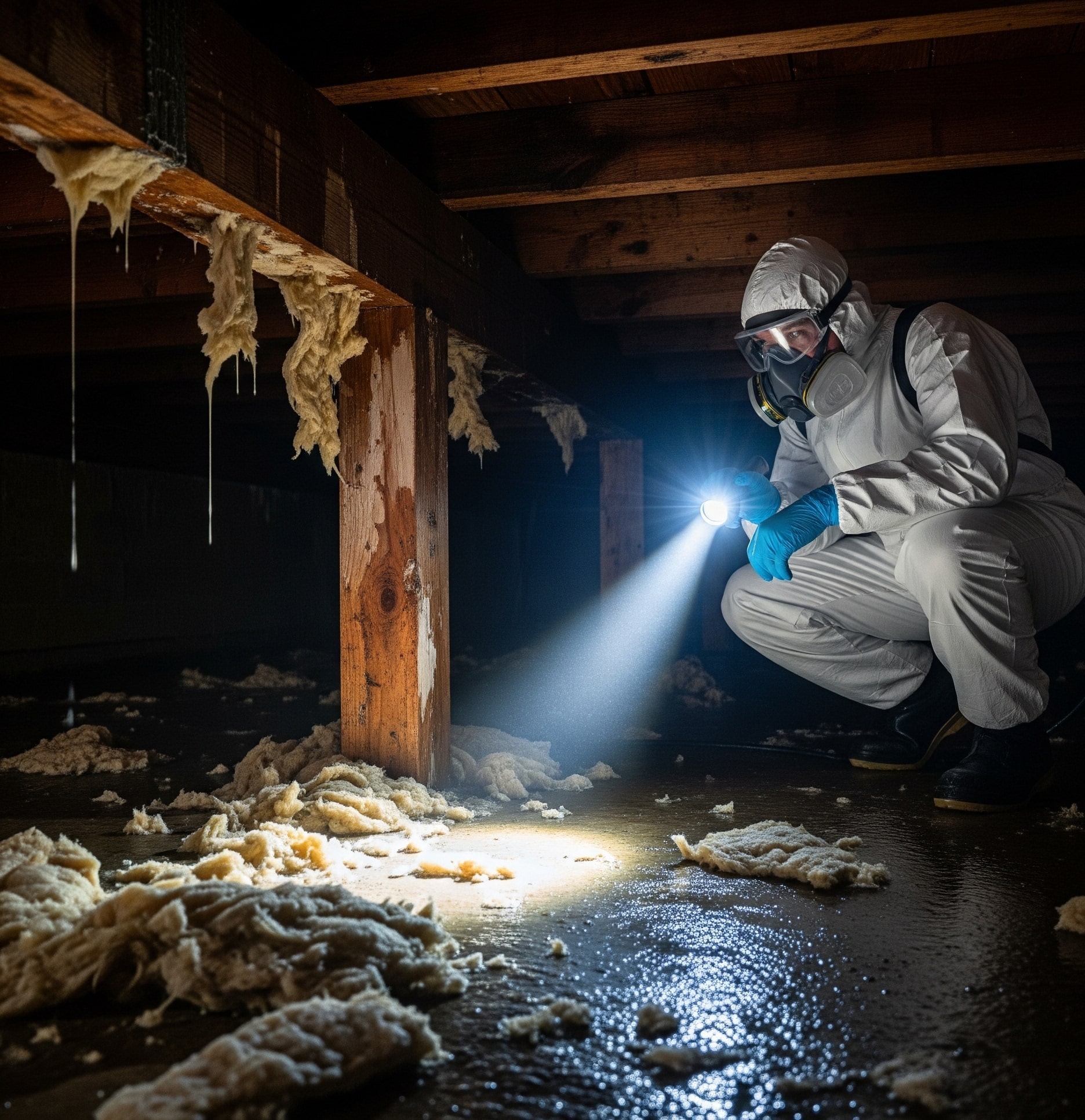
Insulation works by trapping air. When it gets wet, it stops insulating, gets heavy, and sags or falls out of the joists. Some homeowners notice this first as cold floors.
The bigger problem is what it does while it stays wet. Fiberglass batts are installed right against the subfloor. When they soak up water, they hold that moisture against the wood. The EPA advises drying water-damaged materials within 24 to 48 hours to prevent mold growth. Wet insulation pressed against a subfloor can stay damp much longer than that, which leads to musty smells, mold on the underside of the floor, and eventually rot.
Dry it or replace it?
When it might be dried in place
It got a little damp from humidity, not soaked by a leak.
The water was clean, from a supply line.
It is still holding its shape and still up in the joists.
It can be dried quickly, and readings confirm the wood behind it is dry too.
When it should come out
It is soaked, compressed, sagging, or on the ground.
The water was dirty: sewage, groundwater, or anything that sat for a while.
It smells musty or has visible mold.
It has rodent droppings or nesting in it.
It is blocking access to wet subfloor or framing that needs to be dried.
In practice, insulation that got soaked usually gets replaced. It is usually the more reliable option, because pulling it is the fastest way to dry the wood behind it. Material that is still in good shape can sometimes stay.
Check the wood, too
Once the insulation is out, the subfloor and joists can be checked properly. A good inspection uses a moisture meter on the wood, looks for staining, mold, and soft spots, and checks the sill plates along the foundation. Wood that is wet but sound can be dried with dehumidifiers. Wood with surface mold can be cleaned. Wood that has rotted needs to be repaired or replaced.
What you can do yourself
Find and stop the water source. Have a plumber fix any leak. Our post on water in the crawlspace after rain covers drainage and groundwater.
Take photos from the hatch before anything is removed, in case it becomes an insurance claim.
Do not go in without gear if you see standing water near wiring, sewage, or droppings. Wet fiberglass is also itchy and heavy. Wear gloves, long sleeves, eye protection, and an N95 mask at minimum.
Do not stuff new insulation into a space that is still wet. That traps moisture and starts the problem over.
Pulling a few small batts from a dry crawlspace is a reasonable homeowner job. Pulling a whole crawlspace of soaked insulation, drying the framing, and replacing everything is a bigger job.
What a proper fix looks like
Stop the water source.
Remove and bag the wet insulation.
Pump out standing water and dry the soil, subfloor, and joists with dehumidifiers until moisture readings are back to normal.
Clean and treat any mold on the framing.
Repair or replace the vapor barrier.
Install new insulation once everything is dry.
For crawlspaces that get wet every winter, it may also make sense to look at drainage or sealing the space. Our guide to crawlspace encapsulation explains when that is worth it.
Will insurance pay?
If the insulation got wet from a sudden plumbing leak, replacing it is often part of a covered claim. If it got wet from long-term groundwater or humidity, it often is not. Ask your agent, and document the source.
Get the crawlspace checked
Harris Restoration removes wet insulation, dries the framing, and replaces what was damaged, with the reasons explained before work starts. Call (971) 267-2779 or request an inspection. Learn more about our crawlspace and attic restoration service.
DON’T WAIT.
The Damage Won’t.
Read more

Who Pays the Restoration Bill If Insurance Is Slow?
The water is dried out and the restoration company sent the bill. But the adjuster has not called back, the claim is still open, and you are wondering whether you are on the hook. This guide explains how payment usually works on an insurance claim, what you can do to speed it up, and the questions to ask before work starts.

Sewage Backup Under the House: Cleanup and Coverage
A broken drain line or a backed-up sewer has sent wastewater into the crawlspace. You may smell it before you see it. This guide covers what to do right away, why sewage cleanup is different from a clean water leak, and how insurance usually handles it.

Should You File a Water Damage Claim or Pay Yourself?
The water is off and the damage is in front of you. Now comes a harder question: file an insurance claim, or pay for it yourself? The answer depends on your deductible, how big the damage really is, and how a claim might affect you later. This guide walks through how to decide.