Restoration Guide
Burst Pipe? What to Do in the First 30 Minutes
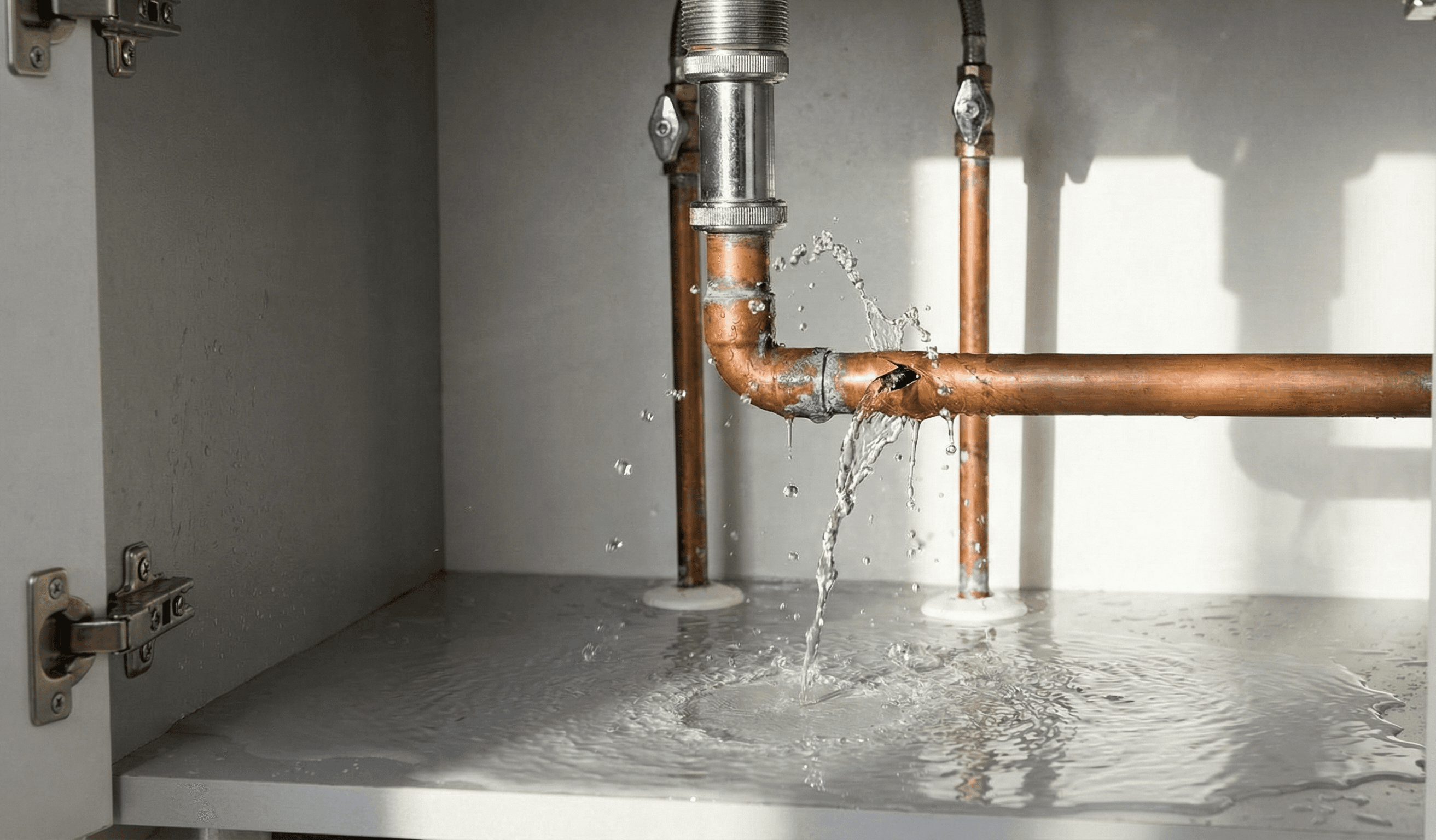
Water is coming through the ceiling, pouring from under a sink, or spreading across the floor. What you do in the next half hour decides how much of the house gets wet and how smoothly the insurance claim goes. This is the short list, in order.

Harris Restoration
"A pipe burst in our upstairs bathroom while we were at work"
That is how one homeowner on a forum started their story. Theirs is a common one: nobody home, water running for hours, and a ceiling or floor soaked by the time anyone walks in. If you are reading this with water on the floor, skip ahead to the first step. You can read the rest once the water is off.
Minute 1 to 5: Stop the water
Shut off the main water valve. In many Willamette Valley homes it is in the crawlspace near where the line enters the house, in the garage, or near the water heater. If you cannot find it, the city meter box near the street usually has a shutoff, though it may need a meter key.
If the break is at one fixture, like a toilet or sink supply line, the small valve behind that fixture will stop it faster.
Turn off the water heater if the hot water side is involved. Switch off the breaker for an electric heater, or set a gas heater to pilot.
Minute 5 to 10: Make it safe
Turn off power to rooms where water is near outlets, appliances, or light fixtures. Do it from the breaker panel, and only if you can reach the panel without standing in water.
Stay out from under sagging ceilings. A ceiling holding water can come down without warning.
Do not use a household vacuum on standing water. It is an electrical hazard.
Get kids and pets out of the wet area.
Minute 10 to 15: Drain the lines and contain the spread
Open the lowest faucets in the house, and an outdoor spigot, to drain water still in the pipes.
Put down towels and buckets to stop water spreading into other rooms.
If water is coming through a ceiling, a small hole poked in the lowest point of a bulge, with a bucket under it, can relieve the weight. Only do this if you can stand safely to one side.
Minute 15 to 20: Document everything
Before you clean up, take photos and video. This is the step people skip, and it is the one insurers care most about.
The broken pipe or fitting, close up.
Standing water in each room, with something for scale.
Wet walls, ceilings, floors, and baseboards.
Damaged furniture, rugs, electronics, and belongings.
Write down the time you found it and what you saw.
Keep the broken part. If a plumber removes a section of pipe or a failed fitting, ask for it back.
Minute 20 to 25: Protect your belongings
Move furniture, rugs, electronics, and boxes out of the water.
Put foil or plastic under furniture legs that cannot be moved, so wood stain does not bleed into carpet.
Pick up anything on the floor: books, shoes, papers.
Hang up wet rugs and fabrics where air can reach both sides.
Minute 25 to 30: Make the calls
A plumber to fix the pipe so water can be turned back on.
A water damage restoration company to extract the water and start drying. The EPA advises drying water-damaged materials within 24 to 48 hours to prevent mold growth.
Your insurance company or agent to report the loss and get a claim number. You do not have to wait for the adjuster before drying starts. Your policy expects you to take reasonable steps to prevent further damage.
One of our customers wrote that we "handled scheduling with my plumber." Getting the plumber and the drying crew working together saves days.
Why mopping is not enough
Water does not stay on the surface. It wicks up drywall, runs under flooring, soaks into insulation, and pools in wall cavities and crawlspaces. A floor can look dry in a day while the subfloor underneath stays wet for weeks. That hidden moisture is what turns a clean pipe burst into warped floors, mold, and a much bigger claim.
Professional drying means extracting standing water, using moisture meters and a thermal camera to find where the water went, and running dehumidifiers and air movers until the readings show the materials are dry. Daily readings also give your insurer proof of what was wet and how it was dried.
What causes pipes to burst
In Oregon, cold snaps are a common cause, especially for pipes in crawlspaces, garages, and exterior walls. Our guide to preventing and thawing frozen pipes covers that. Other causes include old supply lines, corroded fittings, high water pressure, and failed washing machine or dishwasher hoses.
Will insurance cover it?
A sudden pipe burst is often covered by a standard homeowners policy. A slow leak that went on for months often is not. Documentation is what shows the difference. Our plain guide to water damage claims walks through the rest.
Call us any hour
Harris Restoration answers 24/7. We extract the water, dry the structure, and document every step for your insurer. Our in-house public adjuster, Nataie, who is fully IICRC certified, can help with the claim. Call (971) 267-2779 now or contact us. Learn more about our water damage restoration service.
DON’T WAIT.
The Damage Won’t.
Read more

Who Pays the Restoration Bill If Insurance Is Slow?
The water is dried out and the restoration company sent the bill. But the adjuster has not called back, the claim is still open, and you are wondering whether you are on the hook. This guide explains how payment usually works on an insurance claim, what you can do to speed it up, and the questions to ask before work starts.

Sewage Backup Under the House: Cleanup and Coverage
A broken drain line or a backed-up sewer has sent wastewater into the crawlspace. You may smell it before you see it. This guide covers what to do right away, why sewage cleanup is different from a clean water leak, and how insurance usually handles it.

Should You File a Water Damage Claim or Pay Yourself?
The water is off and the damage is in front of you. Now comes a harder question: file an insurance claim, or pay for it yourself? The answer depends on your deductible, how big the damage really is, and how a claim might affect you later. This guide walks through how to decide.