Restoration Guide
24/7 Emergency Water Extraction in McMinnville, OR
Water is coming through the ceiling, pooling on the floor, or sitting in the crawlspace, and it is the middle of the night. This guide covers what to do in the first hour, what emergency water extraction actually involves, and how to tell whether you can handle it yourself or need a crew tonight.

Harris Restoration
"My basement is flooded. What do I do now?"
It is one of the most common questions homeowners ask. Sometimes it is a supply line under the sink. Sometimes a toddler found the upstairs bath, and one family "discovered it coming out through a heating vent downstairs." Sometimes it is what another customer called a "small-pond-in-the-crawl-space experience."
Whatever the source, the next hour matters more than any hour after it. Here is what to do, in order.
The first hour: what to do before help arrives
1. Make it safe
If water is near outlets, cords, or the electrical panel, do not walk through it. Turn off power to the affected area at the breaker only if you can reach the panel without standing in water.
If a ceiling is sagging or bulging, stay out from under it. A wet ceiling can come down at once.
If the water came from a toilet, sewer line, or outside flooding, treat it as contaminated. Keep kids and pets away and wear gloves and boots.
2. Stop the water
Shut off the main water valve. In most Willamette Valley homes it is where the line enters the house, often in the crawlspace, garage, or a box near the street.
For a single fixture, close the valve under the sink or behind the toilet.
If water is coming in from a roof leak during a storm, put buckets under the drip and move belongings out from under it.
3. Document it
Take photos and video before you move anything: the source, the standing water, wet walls and baseboards, and damaged belongings. Say the time out loud in the video. Your insurance adjuster may not see the house for days, and by then the water is gone. These photos are your proof of what it looked like.
4. Protect what you can
Move rugs, electronics, papers, and photos to a dry room.
Put aluminum foil or plastic under furniture legs so stain and finish do not bleed into wet carpet.
Do not run a household vacuum on wet floors. It is an electrical hazard and it will not pull water out of carpet pad.
Hold off on running the furnace or AC if the ducts or crawlspace are wet. It can spread moisture and odor through the house.
What emergency water extraction involves
Extraction is the first stage of water damage restoration. The goal is to get the bulk water out fast so the drying stage has less to do.
Assessment. We find the source, confirm it is stopped, and check what kind of water it is. Clean water from a supply line is handled differently than water from a sewer line.
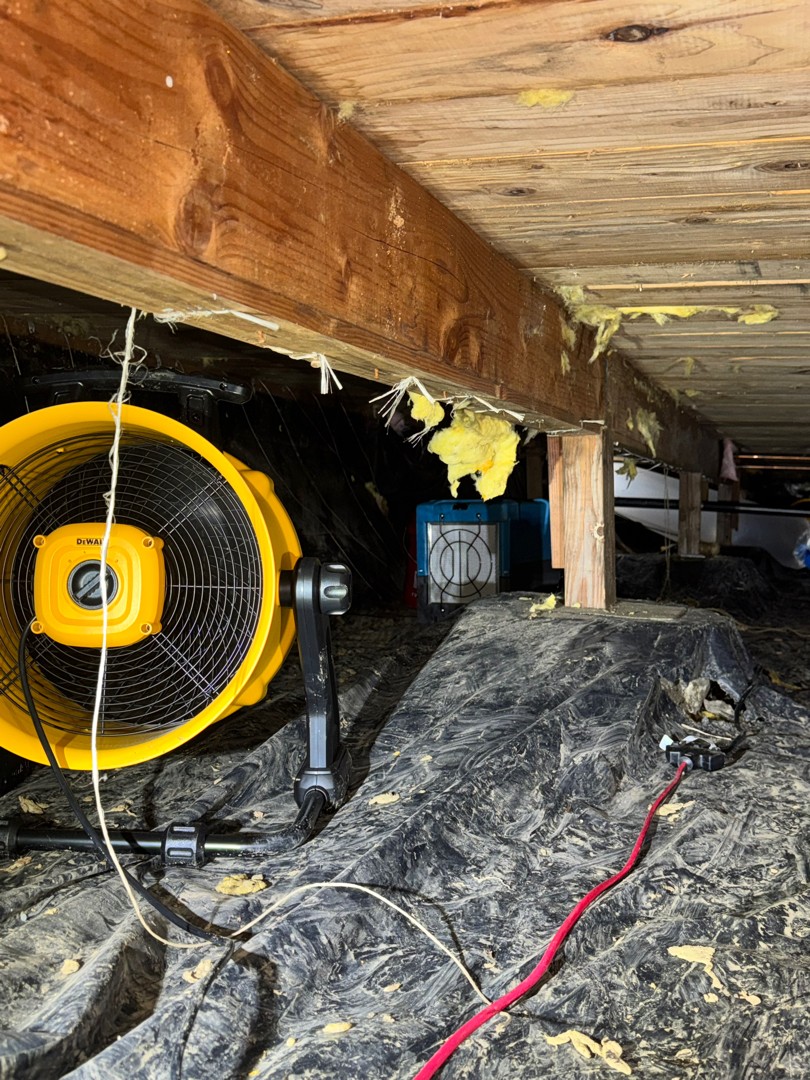
Extraction. Commercial extractors pull water out of carpet and pad. Pumps handle standing water in crawlspaces and basements.
Moisture mapping. Moisture meters and thermal imaging show where water traveled behind walls and under floors. Water moves farther than it looks.
Removal of what cannot be saved. Soaked carpet pad, wet insulation in a crawlspace, and sometimes the bottom of drywall come out so the structure can dry.
Drying setup. Air movers and dehumidifiers go in, and the moisture readings get logged. You can read how that part works in our guide to structural drying after water damage.
Every step is photographed and logged. That record is what your insurance company uses to decide what it pays for.
Why speed matters
The EPA advises drying water-damaged materials within 24 to 48 hours to prevent mold growth. Past that window, a water job can turn into a mold job, and the bill grows with it. Wood swells, drywall softens, and insulation in a crawlspace holds water against the floor joists.
Insurance cares about speed too. Most policies expect you to take reasonable steps to stop further damage. A quick call and a documented start time help show you did. We cover this in more detail in how to prevent secondary water damage.
Can you handle it yourself?
Honestly, sometimes yes. If a small amount of clean water hit a hard floor, you found it within minutes, and nothing soaked into walls, carpet, or cabinets, a wet vac, towels, and a fan may be enough. Watch the area for a few days. If you notice a musty smell, a soft spot in the floor, or swelling at the baseboards, call someone.
Call a crew if any of these are true:
Water soaked into carpet and pad, drywall, or under hardwood.
Water is standing in the crawlspace or basement.
The water came from a toilet, sewer line, or outside.
You do not know how long it was leaking.
You plan to file an insurance claim. Professional moisture readings and photos carry weight with adjusters.
Oregon water season
From fall through spring, the Willamette Valley stays wet. Clay soil around many Yamhill County homes drains slowly, so water can sit in crawlspaces long after the rain stops. Pipes can also split during a cold snap. Many of our emergency calls start in the crawlspace, where nobody looks until the house starts to smell.
Insurance help from the first call
Harris Restoration has an in-house public adjuster, Nataie, who is fully IICRC certified. She can help you understand your policy and start the claim while the crew handles the water. One customer put it simply: "they helped talk me through the insurance side of things as well." Ask about it when you call.
Call any time, day or night
Harris Restoration answers 24/7 for water emergencies across Yamhill County and nearby communities. Call (971) 267-2779, or send us a request and we will call you back. If the water is still running, shut off the main first, then call. Learn more about our water damage restoration service.
DON’T WAIT.
The Damage Won’t.
Read more

Who Pays the Restoration Bill If Insurance Is Slow?
The water is dried out and the restoration company sent the bill. But the adjuster has not called back, the claim is still open, and you are wondering whether you are on the hook. This guide explains how payment usually works on an insurance claim, what you can do to speed it up, and the questions to ask before work starts.

Sewage Backup Under the House: Cleanup and Coverage
A broken drain line or a backed-up sewer has sent wastewater into the crawlspace. You may smell it before you see it. This guide covers what to do right away, why sewage cleanup is different from a clean water leak, and how insurance usually handles it.

Should You File a Water Damage Claim or Pay Yourself?
The water is off and the damage is in front of you. Now comes a harder question: file an insurance claim, or pay for it yourself? The answer depends on your deductible, how big the damage really is, and how a claim might affect you later. This guide walks through how to decide.